Thursday, November 13, 2014

D-Light USB Rechargeable Front and Rear Lights

I recently came across these bicycle lights that are small and yet powerful. As they are small and lightweight, they are perfect for use on road bikes. Road bikes will usually only require blinkers, or "to be seen" lights. There is rarely a need for strong lights to light up the road, as most roads in Singapore are well lit at light.

This is the front light, and it is USB rechargeable and so there is no need for expensive button cell batteries.

Very small and yet very bright!

Decent battery life for such a small light. The flashing mode is my usual mode and it can easily last throughout the night if required.

Comes with all the mounting hardware! Velcro strap for helmet mounting, rubber strap for handlebar mounting, and cable ties for everywhere else.

Compact front light, with the button on top. The light is about the size of a small chicken nugget.

Two powerful white LEDs, together with excellent optic lens design creates a very bright light!

Micro USB charging port at the back, sealed by a rubber cover

Mounting bracket for the light. The hooks are for the rubber straps to hook on to.

To attach the light to the bracket, just align the bracket with the light and twist it 90 degrees to lock in the position.

Very lightweight at only 25 grams each, including the bracket and rubber strap.

Different mounting methods as shown in the user manual

The 4 different lighting modes for the front light. This model is CG-211W.

Super bright LEDs makes this front light an amazing light. Small, lightweight, rechargeable and inexpensive, there is nothing bad about this light.

In order not to take up space on the handlebar, the pair of front lights are mounted at either side of the stem spacers. 


Two cable ties plus a rubber shim are used to hold the lights tightly against the stem spacers.

The lights are able to stay in this downward tilting position even over bumpy roads.

Looks like a pair of headlights coming from either side of the head tube. The cable outer casings does not really block the lights.

 View of the front lights from the top. These lights are bright even in the day!

As the centre of mass of the light is near the bracket mounting point, plus the fact that it is so lightweight, these lights are able to maintain the angles as shown even over bumpy ground. The lights will not rotate in their brackets even on rough roads. This rather interesting mounting position is only possible due to the compact size and low weight of these lights.

At the same time, I also got the matching rear light for the Merida Scultura 5000 road bike.

Rear light is also available, with the light oriented in a vertical manner.

Also small sized and super bright like the front light.

Very decent battery life, given the small size of the light. The flashing mode is sufficient for an entire night of riding.

Also comes with all the mounting hardware, for mounting the light anywhere on the bike or helmet.

Power button / mode button located at the middle of the light

Micro USB port located at the bottom of the light, sealed by a rubber cover

Bracket for the rear light. Not quite the same as the front light bracket, as this rear version has a tilted mounting point.

The tilted mounting point ensures that the light points horizontally backwards when mounted on the tilted seatpost.

Very lightweight at only 21 grams inclusive of the bracket and the rubber strap

3 bright red LEDs gives out a very visible pattern that is surprisingly bright for such a small rear light.

Various suggested mounting methods for the rear light

4 modes for this rear light. The model is CG-211R.

Mounted just under the seatpost clamp, and does not take up space on the seat post.

Rear light manages to clear the top of the rear tire for visiblity.


Since this rear light is good enough to be the primary rear light, I have since removed the other Bontrager rear light from the seat post.

These front and rear lights are made in Taiwan and are of good quality. One thing that I like is that the mounting hardware are all provided to cater for all sorts of mounting positions. These mounting methods are also tool free, which means that you can easily remove the light for charging or to move them to another bike, without using any tools at all.

These lights are also very lightweight and compact, which are perfect for mounting on road bikes. USB charging makes these small sized lights more feasible, as there is no need to deal with expensive button batteries that run out rather quickly. If you are looking for some bright, compact and lightweight bicycle lights that are not too expensive, these D-Light front and rear lights are a good choice.

Monday, November 10, 2014

Merida Scultura 5000 - Colouring the Bike

When I get a new bike, I always have the urge to add some decorations to the bike. Usually this is in the form of some coloured accessories or add-ons to give the bike some extra dash of colour. The Dahon Boardwalk is dressed in black and gold, while the Dahon MuEX is decorated with red accents on the nice black frame.

For this new Merida Scultura 5000, the frame colour is mainly black with some stripes of sky blue across the frame. I decided to add a bit of blue accents to the bike to personalise it a bit more. However, the important part is to add just blue accents to the bike, and not overwhelm the bike with large areas of blue.

First, I decided to add a couple of bar end lights to try out. At only a few dollars from Taobao, there is no harm trying them out to see how they fare. They are not available in blue, which is why I got the black ones.

Simple pair of bar end lights

Bar end lights when turned on. Not very bright though.

How it looks when installed at the end of the drop bar.

Just press on the translucent rubber to turn on the light. Not very bright in the day, but quite visible at night.

It was found that these bar end lights are not very bright, but then again, I can't expect too much from a cheap light like this. Definitely not bright enough to be a primary rear light, but good enough to add a bit of lighted bling to the bike.

Next would be all the little blue parts that I used to accent the bike! The tricky part about this shade of blue is that it is not that common. Sky blue is not a common colour for bicycle components, and thus it is difficult to find the correct shade of blue to match the blue on the frame.

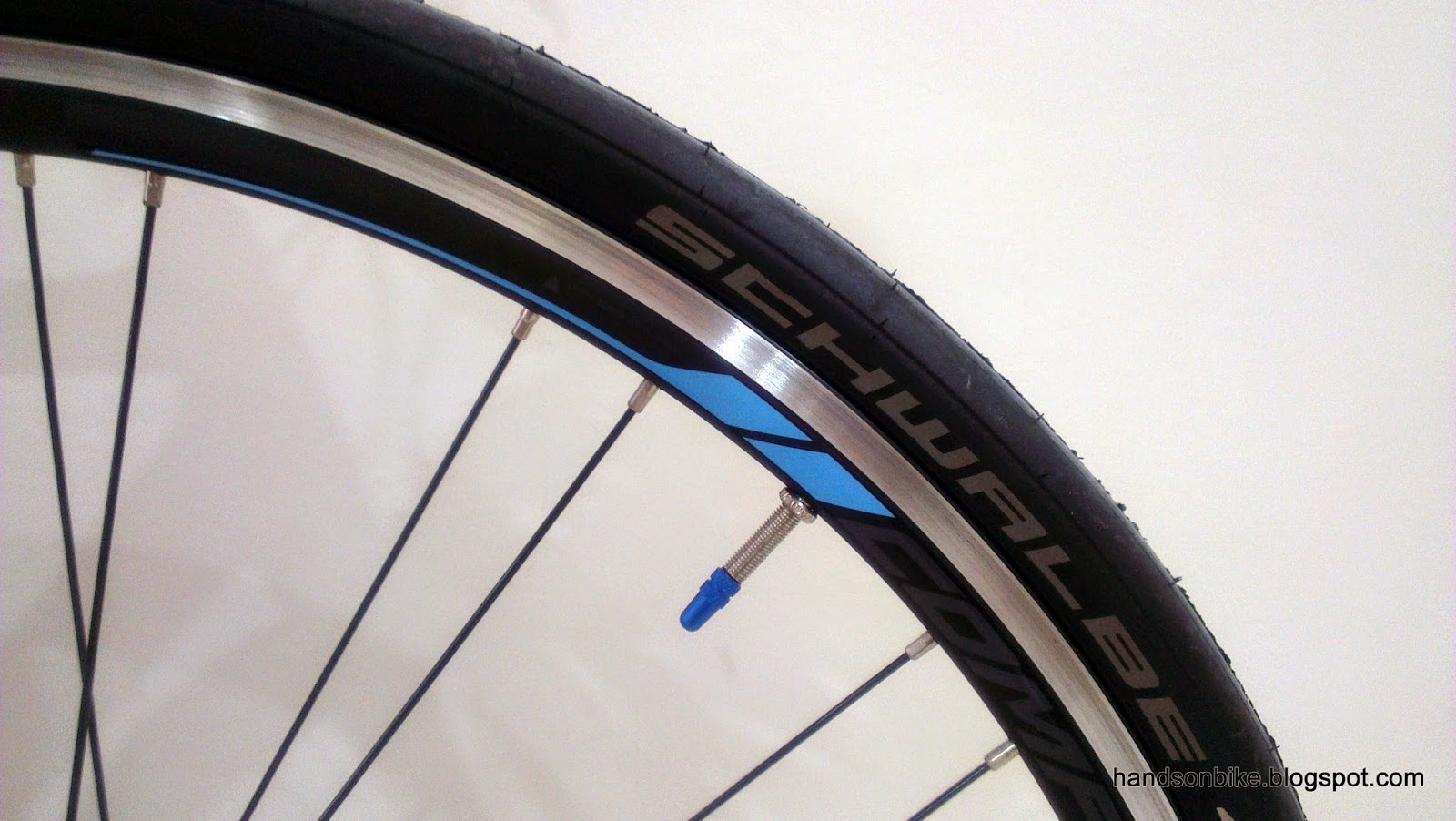
Presta valve caps in blue. This shade of blue is the closest I could find that matches the sky blue on the frame.

Fits nicely on the Presta valves on the bike. Nothing too flashy here.

Zoomed out view of the blue valve cap on the wheel. Very subtle tinge of blue.

Other than the valve caps, I came across the rubber seatpost ring made by Fizik. The purpose of this seatpost ring is to prevent water from flowing down into the frame through the seatpost area. I managed to find the correct sized ring for my seatpost (Diameter 27.2mm), and in almost the correct shade of sky blue!

Light blue Fizik seatpost rubber ring

Fits nicely on the seatpost...

...and the shade of blue matches the blue on the frame quite nicely.

Lastly, these coloured inner cable end caps add a nice dash of colour to the end of the shifter cables and brake cables. These are the little details that matter, and it shows the level of detail that you apply to the bike. Not expensive and yet useful.

Available in all sorts of colour from Taobao, and very cheaply too. This shade of blue is a little dark though.

Blue inner cable end cap seen at the end of the shifter cable on the RD

Another coloured end cap on the shifter cable of the FD

Update:
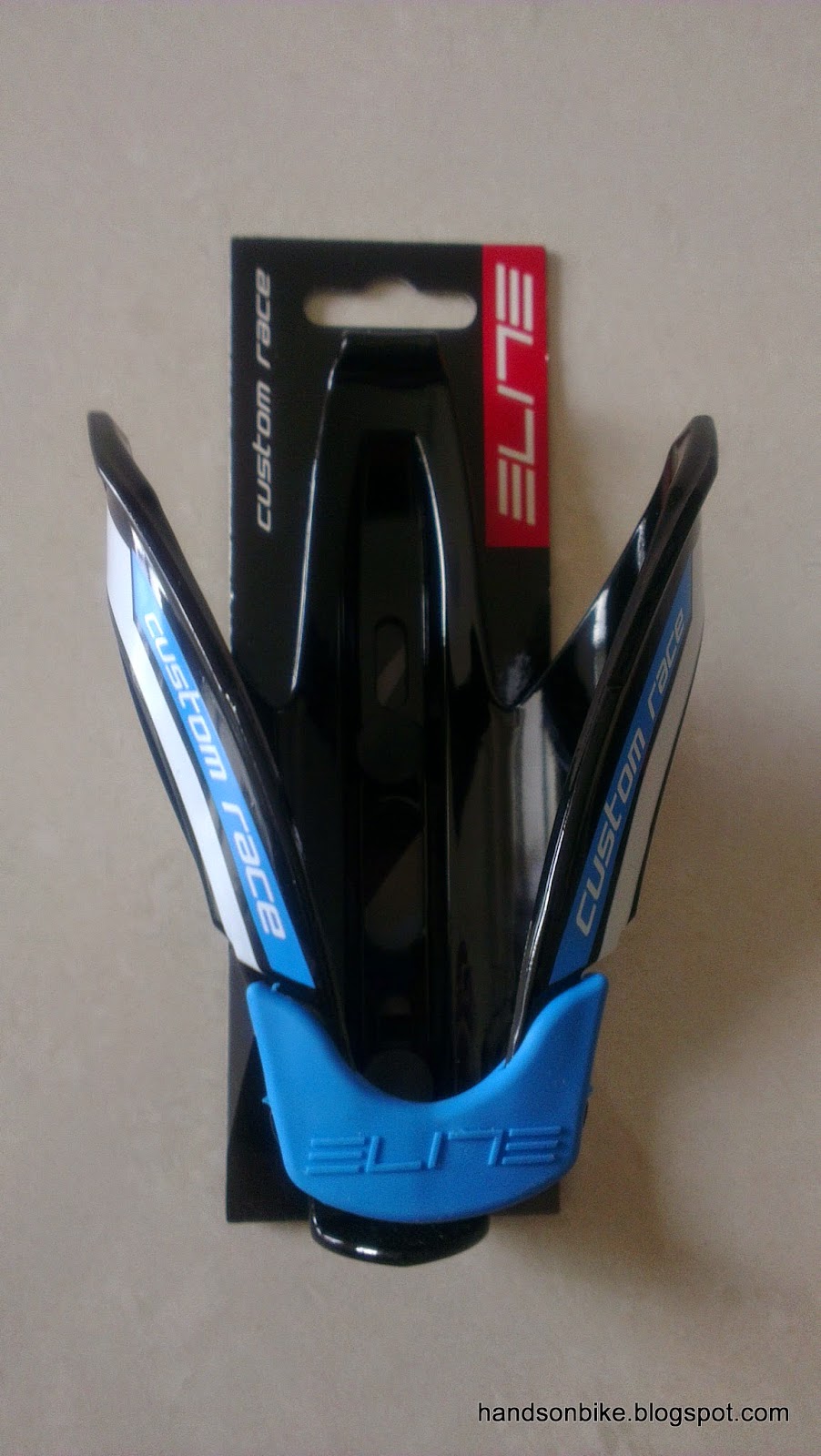
Came across this bottle cage which has a nice shade of blue that matches the frame colour perfectly! Decided to get two of these bottle cages to replace the original Merida bottle cages.

Sky blue bottle cage 

Made of glass fibre reinforced nylon. Tough engineering plastic. 

Comparing it side by side with the original Merida bottle cage. The Merida bottle cage is actually very nice and lightweight, just that it does not have the blue colour. 

Somewhat heavier than most other bottle cages at 42 grams each. 

Merida aluminium bottle cage is actually very lightweight at only 25 grams, comparable to many carbon bottle cages out there. 


The blue coloured bottle cage fits in really nicely with the rest of the frame

I decided to install both the new bottle cages despite them adding a little bit more weight to the bike. 

I also discovered that the small tool bottle fits nicely into the new bottle cage!

In another post, I wrote about how the Merida bottle cage does not match nicely with the tool bottle. However, since the tool bottle can now fit snugly into the new blue bottle cage, I moved the tools from the large tool bottle to the smaller tool bottle. The small amount of weight gained from using the new bottle cages has been offset by the change to a smaller tool bottle.

Final view of the bike with the new blue bottle cages and the small tool bottle! Compare this to the previous set up, with the large tool bottle and the Merida bottle cages.

When I add colour to a bike, I try not to overwhelm the bike with too much colour. Instead, I feel that the better way is to add little coloured accents here and there, to bring out the original colour that is on the frame. This can be seen on the MuEX which I built earlier this year.

Lots more to write about for this Merida bike!

Friday, November 7, 2014

Merida Scultura 5000 - Ultegra 6800 Cassette vs 105 5800 Cassette

As you may have read from the previous posts about the Merida Scultura 5000, the groupset that is on the stock bike is not a full Ultegra groupset. In other words, not all of the components that are used are of Ultegra grade. Some of the components used are actually of lower grade (Eg. Shimano 105) or of other brands (Eg. Merida's in house brand).

The reason that the OEMs do this is to save some costs on the components. By using some lower grade or non branded components, the OEM can lower the selling price of the bike and still maintain their profit margin. Most cyclists look at only the shifters and rear derailleur when looking for the groupset that is on the bike, which is why the shifters and RD are always of a higher grade than other components. There are some bike brands which advertise their bike as an Ultegra bike, when only the shifters and RD are of Ultegra grade.

On the other hand, some brands do try to put a full groupset on a bike. A good example is Polygon. For their new 2015 Polygon Helios C6.0, it has a full Shimano 105 5800 groupset on the bike. Besides the usual shifters, RD and FD, it also has a Shimano 105 crankset, brakes, cassette and chain. To sweeten the deal even further, it has a decent quality Shimano RS21 wheelset with the high end Schwalbe Ultremo ZX tires!

Now, back to the Merida Scultura 5000. One of the components that is not of Ultegra grade is the cassette, which uses the Shimano 105 5800 cassette. There is nothing wrong with using a 105 grade cassette, as it performs just as well as higher end cassettes. My Dahon Boardwalk also uses a 105 cassette with Dura-Ace chain and Ultegra Di2 groupset. The Dahon Vitesse uses a mixture of 10 speed 105 5600, 105 5700 and Tiagra 4600 components with no problem at all, as they are all compatible.

I was curious to find out for myself what is the difference between the Shimano 105 5800 cassette and the Ultegra 6800 cassette. Most people know the difference to be merely weight, but are there more subtle differences? Besides the weight, what are the similarities and differences? That was the reason I went to get myself a Shimano Ultegra 6800 cassette, 11-28T to make the comparison.

The original Shimano 105 5800 11 speed cassette, 11-28T.

The new Ultegra 6800 11 speed cassette, also in 11-28T.

Actual weight of Shimano 105 5800 11 speed cassette, 11-28T is 275 grams.

Actual weight of Shimano Ultegra 6800 11 speed cassette, 11-28T is 247 grams.

The Ultegra cassette is about 28 grams lighter than the 105 cassette, which is very little compared to the entire bike weight. It is not worth changing from 105 to Ultegra cassette just for weight savings. Let us take a look at the other similarities and differences!

First, let's see how to differentiate the Ultegra sprocket from the 105 sprocket. Looking at the surface treatment, the Ultegra sprocket has a matte sandblasted finish, while the 105 sprocket has a shiny Nickel-Chrome plating. This applies to all the sprockets in the 11 speed cassette.


Ultegra sprocket with sandblasted finish on the left, 105 sprocket with shiny plating on the right.

Next, we will look at the components of the cassette, broken down into the different sprockets for comparison. From the pictures below, it will be possible to see the similarities and differences in the structure of the two cassettes.

Ultegra cassette at the top, Shimano 105 cassette at the bottom. Spot the differences!

Shimano 105 cassette. One large aluminium spider for the group of 23-25-28T sprockets, all other sprockets are individual.

Shimano Ultegra cassette. One aluminium spider for the group of 23-25-28T sprockets, and a second spider for the group of 19-21T sprockets.

The main difference that can be spotted by looking at the two groups of sprockets shown above would be the structure of the cassette. The 105 cassette has only one spider for weight saving, while the Ultegra cassette has a two spiders for more weight saving. Consequently, there are 5 spacers for the 105 cassette and 3 spacers for the Ultegra cassette.

Let's take a closer look at the aluminium spiders of the cassettes.

Spider on 105 cassette, weighing 117 grams. Spider material is aluminium, and seems to be spray painted?

First spider on Ultegra cassette, weighing slightly lesser at 110 grams. Spider material is aluminium and is anodised.

Anodised aluminium spider on Ultegra looks very good!

19T and 21T sprockets from the 105 cassette, together with a plastic spacer. Weighs 59 grams.

Second spider of 19-21T from the Ultegra cassette, weighing less at 49 grams.

Another view of the 19-21T construction of the two cassettes. The Ultegra cassette uses a spider to group the two sprockets together, while the 105 cassette uses separate sprockets which weigh a little more.

The second spider on the Ultegra cassette looks really interesting, so let's take a closer look at it.

Second spider on Ultegra cassette, for 19-21T sprockets.

 
The second spider is actually made of PA-CF, which is a type of tough engineering resin used for high strength applications.

Another look at the front of the second spider on the Ultegra cassette.

PA-CF is a really strong engineering resin that can be used to provide a strong structure for many components. It is a mixture of nylon and carbon fibre, which gives it high strength, and yet can be shaped easily into complex structures by injection molding. Some other components on the bike where you can find PA-CF material would be the shifters and chainrings. PA-CF is also called carbon composite in some industries.

This PA-CF is apparently tough enough to be used in high strength areas such as this, where the spider needs to be locked securely against the serrations on the rear freehub body.

Besides the sprockets, the other differences would be the spacers and the lockring.

Aluminium spacer from the Ultegra cassette on the left, resin spacer from the 105 cassette on the right. Not much difference in weight.

Aluminium lockring from the Ultegra cassette on the left, steel lockring from the 105 cassette on the right. The Ultegra lockring is anodised for a nicer appearance.

Steel 105 lockring is 12 grams...

...while the Ultegra lockring is only 4 grams!

Ultegra cassette on the Merida rear wheel.

New Ultegra cassette with a nice matte finish.

Similarities
1) Sprocket teeth design is the same from 11T to 17T, and 21-25-28T.
2) Shifting performance is similar. Can't feel any difference during shifting.

Differences
1) Two spiders on Ultegra cassette compared to one on 105 cassette.
2) Different construction of 19T and 21T.
3) Different spacer material.
4) Different lockring material and finishing.
5) Different surface finishing on sprockets.
6) Weight difference of 28 grams (7g from first spider, 10g from second spider, 8g from lockring and the remainder from spacers and rounding off errors)
7) Cost. Ultegra cassette costs about $20+ more than the 105 cassette on online stores.

Seems that there are more differences than similarities! However, most of the differences cannot be seen without taking apart the cassette. Since the shifting performance is similar, it is of no surprise that most OEMs will spec a lower grade cassette to save cost, since it is next to impossible for an untrained person to spot any differences.

As previously stated, I feel that there is no point upgrading the cassette for the small weight savings. However, it is nice to use all the components from the same groupset as it looks and feels nice. That said, the other components on the Merida Scultura 5000 that are not of Ultegra grade are the brakes, crankset, BB and chain...